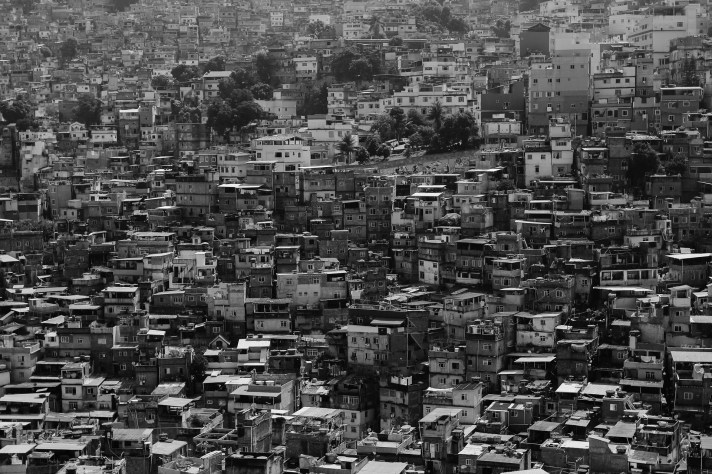
I never really experienced poverty. Neither have I counted myself among the rich. There were those who had way more money than I ever had, and there were those who had way less. What really blows my mind away is the fact that those who earn more than $32,400 per year are among the top 1% of the richest people in the world. Even with my meager earnings, I still possess way more wealth than a majority of people living on earth.
Solomon observed, “The rich and the poor meet together; | the Lord is the Maker of them all” (Prov. 22:2). The gist of the proverb is “both rich and poor live side by side in this life…but they both are part of the order of God’s creation…People often forget this and make value judgments, they would do well to treat all people with respect, for God can as easily reduce the rich as raise the poor.”2
The sovereign God of the universe providentially superintends all creation, and nothing escapes His eye. The rich are to be wise stewards of the wealth entrusted to them by God, for it is God who gives them the power to make their wealth Deut. 8:18). Even Jesus warns those who lack compassion for the needy and downtrodden will be made to account on Judgment Day (Luke 16:19-31; Matt. 25:31-46). There is even hope for the poor and downtrodden, for God will uplift them in due time, if not now in the age to come (Psa. 113:4-9; Luke 6:20-26).
All Christians are to realize that each has a cross to bear and the poverty of some is never an occasion for contemp. This point is illustrated well by Bishop of Constantinople, John Chrysostom (AD 354-407). He said,
When therefore thou seest a poor man, and sayest, “It stops my breath that this fellow, young as he is and healthy, having nothing, would fain be fed in idleness; he is surely some slave and runaway, and hath deserted his proper master:” I bid thee speak these same words to thyself; or rather, permit him freely to speak them unto thee, and he will say with more justice, “It stops my breath that thou, being healthy, art idle, and practisest none of the things which God hath commanded, but having run away from the commandments of thy Lord, goest about dwelling in wickedness, as in a strange land, in drunkenness, in surfeiting, in theft, in extortion, in subverting other men’s houses.” And thou indeed imputest idleness, but I evil works; in thy plotting, in thy swearing, in thy lying, in thy spoiling, in thy doing innumerable such things.
And this I say, not as making a law in favor of idleness, far from it; but rather very earnestly wishing all to be employed; for sloth is the teacher of all wickedness: but I beseech you not to be unmerciful, nor cruel. Since Paul also, having made infinite complaints, and said, “If any will not work, neither let him eat,” stopped not at this, but added, “But ye, be not weary in well doing.” “Nay, but these things are contradictory. For if thou hast commanded for them not to eat, how exhortest thou us to give?” I do so, saith He, for I have also commanded to avoid them, and “to have no company with them;” and again I said, “Count them not as enemies, but admonish them;” not making contradictory laws, but such as are quite in unison with each other. Because, if thou art prompt to mercy, both he, the poor man, will soon be rid of his idleness, and thou of thy cruelty (John Chrysostom, Homilies on Matthew, 35.5).
This is what the rich and poor have in common: The earth belongs to the Lord and all that is in it (Psa. 24:1). We are tenants on this earth, and stewards of all that God gives to us. Some of us have more whereas other have less. May we always be generous, never overcome by avarice, empathetic, and always seeing the intrinsic worth of the person next to us. Let us remember the sovereign Lord of the universe can lift up the poor and bring down the rich, and if not now, someday God will set everything to right.
— WGN
- All Scripture cited from The Holy Bible: English Standard Version (Wheaton, IL: Crossway Bibles, 2016), unless noted.
- Allen P. Ross, The Expositor’s Bible Commentary: Proverbs, vol. 5, ed. Frank E. Gaebelein (Grand Rapids, MI: Zondervan, 1991), 1060.

 Love Truth Blog