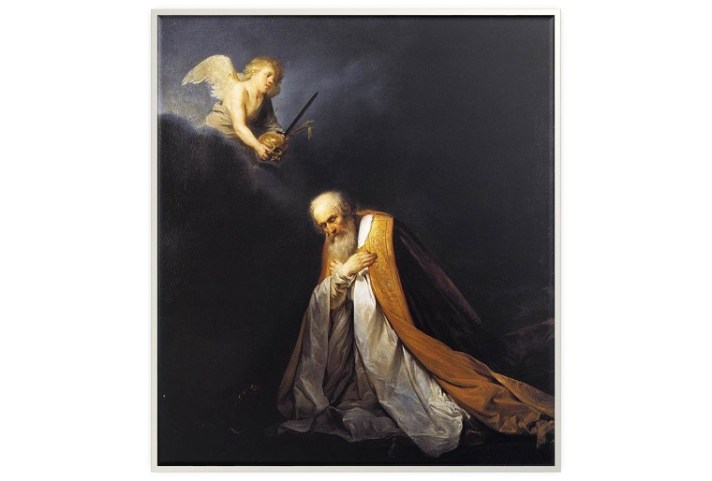
One of the apparent contradictions in the Bible that I come across is whether God or Satan provoked David to sin on a certain. 2 Samuel 24:1 tells us “The anger of the Lord was kindled against Israel, and he incited David against them, saying, ‘Go, number Israel and Judah.’ ”1 On the other hand, 1 Chronicles 21:1 says, “Satan stood against Israel and incited David to number Israel.” How do we make sense of this?
There are several things to consider in this situation. First, God is the sovereign ruler over the universe and the Lord is like a good shepherd who cares for the sheep. Second, Satan is the one who wants to thwart the plans of the Lord and destroy His people. Third, David is the one who strayed from his ethos, fell into sin, and influenced others to do the same. Ultimately, both God and Satan are involved in the prompting of David to take the census. Gleason Archer indicates, “God incited [David] in order to teach him and his people a lesson they needed to learn and to humble them in a way that would promote their spiritual growth. Satan incited him in order to deal a severe blow to Israel and to mar David’s prestige before his subjects.”2
David’s sin came as the result of his own sinful hubris or pride. He began to place trust in his own military might as opposed to the mighty hand of the Lord God omnipotent. David orders a census of his subjects, which essentially informs him of those who could be conscripted into military service. Uneasy about the intent of the census, Joab, the commander of David’s army, says: “May the Lord add to his people a hundred times as many as they are! Are they not, my lord the king, all of them my lord’s servants? Why then should my lord require this? Why should it be a cause of guilt for Israel?” (1 Chron. 21:3). Nevertheless, David prevailed, and received the numbers of “men who drew the sword” (2 Sam. 24:9; 1 Chron. 21:5). J. Barton Payne notes that “on this occasion David seems to have ordered this because he was placing his trust in ‘multiplied troops’ rather than in the promises of God.”3
David subsequently realizes the error and prays: “I have sinned greatly in what I have done. But now, O Lord, please take away the iniquity of your servant, for I have done very foolishly” (2 Sam. 24:10; cf. 1 Chron. 21:8). Speaking through the prophet Gad, the Yahweh tells David to pick one of three punishments: “Shall three years of famine come to you in your land? Or will you flee three months before your foes while they pursue you? Or shall there be three days’ pestilence in your land? Now consider, and decide what answer I shall return to him who sent me” (2 Sam. 24:13; cf. 1 Chron. 21:9-12). Interestingly, David replies, “I am in great distress. Let us fall into the hand of the Lord, for his mercy is great; but let me not fall into the hand of man” (2 Sam. 24:14; cf. 1 Chron. 21:13). He puts himself into God’s hands for the chastening.
The Lord then sends pestilence upon David’s kingdom and a great number of men die as the result.4 Then just as the angel of the Lord was about to destroy Jerusalem the Lord extends mercy and the plague ceases (2 Sam. 24:15-17; cf. Chron. 21:14-15).
It is worth pointing out that the chastening received was less severe than the options presented. Rather than lasting three days, the pestilence begins in the “morning” and last to the “appointed time.” The “appointed time” is understood to be “noon,” which is the way the v. 15 is rendered in the Septuagint (LXX), the ancient Greek translation of the Old Testament. Moreover, the “70,000 men” that perished are understood to be “seventy military units.”5 It is David’s fighting force that was reduced as opposed to the general population.
David is humbled. Rather than seeing his subjects as tools for military conquest, he has a renewed concern for their well-being. Adorned in sackcloth, he prays, “Behold, I have sinned, and I have done wickedly. But these sheep, what have they done? Please let your hand be against me and against my father’s house” (2 Sam. 24:17; cf. 1 Chron. 21:17). Rather than being a great conqueror, David returns to be a faithful worshipper of the Lord. He builds an altar and offers a sacrifice in the place where the angel of the Lord appeared — upon the threshing floor of Ornan, i.e. Arunah (1 Chron. 21:15). Refusing to make an offering that costs nothing, neither land nor materials for the sacrifice are confiscated by the king; rather, they are purchased from Araunah the owner of the property (2 Sam. 24:18-25; cf. 1 Chron. 21:18-28).
Although Satan sought to incite David to do evil, God used the occasion to set David right. David realizes his mistake but instead of just apply some self-help principles to avoid committing the same error over and over again, he entrusts his life to the mercy of the Lord. God never fails David, but sets him in the right direction, though the process is hardly painless.
Our circumstances are hardly different. Although Satan works to destroy our lives, God brings about circumstances to turn us in the direction we ought to go. Solomon advises, “My son, do not despise the Lord’s discipline or be weary of his reproof, for the Lord reproves him whom he loves, as a father the son in whom he delights” (Prov. 3:11-12). The Epistle to the Hebrews, moreover, points out: “For the moment all discipline seems painful rather than pleasant, but later it yields the peaceful fruit of righteousness to those who have been trained by it” (Heb. 12:11).
Just as when a surgeon performs corrective surgery upon a patient, it is typical for there to be physical pain, so too the sanctifying grace flowing from the Heavenly Father to heal us from sin involves the kind of suffering that produces virtues. These virtues produced through suffering can never be obtained any other way. James writes, “Count it all joy, my brothers, when you meet trials of various kinds, for you know that the testing of your faith produces steadfastness. And let steadfastness have its full effect, that you may be perfect and complete, lacking in nothing” (Jas. 1:2-4). More than just offering self-help life hacks, the Lord shapes us into the kind of people we were always meant to be, for we have been created to worship God.
— WGN
- All Scripture cited from The Holy Bible: English Standard Version (Wheaton, IL: Crossway Bibles, 2016), unless noted.
- Gleason L. Archer, New International Encyclopedia of Bible Difficulties, Zondervan’s Understand the Bible Reference Series (Grand Rapids, MI: Zondervan Publishing House, 1982), 188.
- J. Barton Payne, “1, 2 Chronicles,” The Expositors Bible Commentary: 1, 2 Kings – Job, vol. 4 (Grand Rapids: Zondervan Publishing House, 1988), 407.
- It is tempting to use the Lord’s sending of pestilence in 2 Samuel 24 as pretext for presupposing modern epidemics come as the result of divine wrath but I think that is an egregious mistake. For one, there is nary a biblical prophet like Gad whom God appoints to reveal such mysteries for special revelation forthtelling to redirect the wayward. Modern epidemics and pandemics are characteristic of life in a sinful and fallen world. All the sickness, suffering, and death occurring in the world is why the whole of creation is groaning, but the ultimate hope is restoration of the cosmos, which comes through the redemptive work of Christ (Rom. 8:18-25).Nevertheless, God can use sickness pedagogically for the sanctification of His children (1 Cor. 12:7-10).
- cf. Ronald F. Youngblood, The Expositor’s Bible Commentary: 1-2 Samuel, vol. 3, ed. Frank E. Gaebelein (Grand Rapids, MI: Zondervan, 1992), 1100.

 Love Truth Blog
Yahweh and Satan in Samuel and Chronicles?
https://drmsh.com/yahweh-satan-samuel-chronicles/
LikeLike