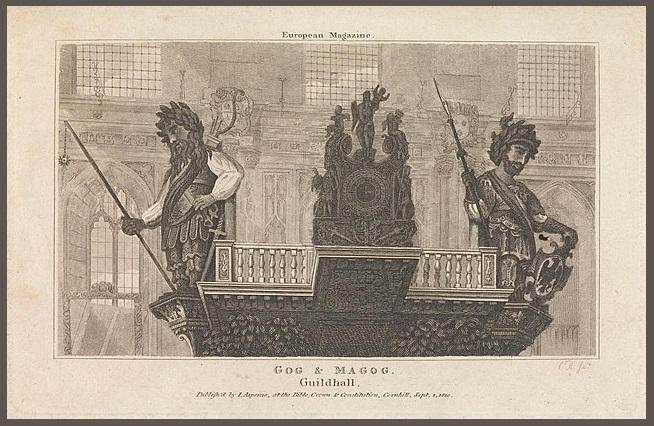
“Son of man, set your face toward Gog, of the land of Magog, the chief prince of Meshech and Tubal, and prophesy against him” (Ezek. 38:2).[1]
How are we to understand the oracles about Gog from Magog in Ezekiel 38-39? Pat Robertson, Christian Broadcasting Network (CBN) Founder, identifies Gog as Vladimir Putin and Magog as Kazakhstan, Uzbekistan, Turkmenistan, Armenia, and Azerbaijan. Robertson also equates Gomer with Ukraine, Persia with Iran, Torgama and Tubal with Turkey and Syria, Put with Libya, and Cush with North Sudan and Egypt.[2] Yet, it is unlikely that Ezekiel 38-39 anticipates this twenty-first century conflict.
What Robertson offers is the latest of many speculative interpretations about the identity Gog and Magog. These speculative interpretations typically morph according to the nemesis of the day. In the fourth and fifth centuries, Gog and Magog were identified with the Goths and Moors, the seventh century with the Huns, the eighth century with the Islamic empire, the tenth century with the Hungarians, the sixteenth century with Turks and Saracens, the seventeenth century with Spain and Rome, the nineteenth century with Napoleon and France, and the twentieth century with leaders of Communist Russia.[3]
This morphing come as the result of failing to read the biblical text in context. It reads into the biblical text the crisis of the moment (eisegesis) rather than drawing out the intended message the biblical writer sought to communicate (exegesis). This sort of newspaper eschatology is a faulty method of biblical interpretation. There is nary any good reason to suppose the present conflict with the Ukraine will set the stage for an end time battle that involves Vladimir Putin leading a massive coalition against the modern state of Israel.[4]
What does Ezekiel 38-39 tell us about the battle with Gog?
The Latter Days: Ezekiel 38-39 tells of a battle with Gog of Magog happening “after many days,” “in the latter years” and “in the latter days” (Ezek. 38:8, 16). These are references to the future, but not necessarily the end of the world. For example, Moses warned of evil befalling the Israelite nation in the “latter days” because they were going to turn from God’s ways (Deut. 31:29), but this came to pass shortly after the death of Joshua (Judg. 2:20).[5]
To be certain, a day will come when Christ appears a second time to set all things right (Heb. 9:27; Jn. 5:28, 11:23-24; 1 Cor. 15:20-28; 1 Thess. 4:16-18; Rev. 20:11-15); however, the oracles of Ezekiel 38-39 point to a different “latter days” battle.
There are other elements from Ezekiel 38-39 that clue us into just how far into the future is the battle with Gog.
Ancient Near East Nations: Ezekiel tells of Israel being attacked by Magog, Meshech and Tubal (Ezek. 38:2; 39:1). Persia, Cush, Put, Gomer, and Beth-torgarmah will join the attack against Israel (Ezek. 38:5-6). These were nations of the ancient Near East known to Ezekiel and the Jewish exiles.
Nations mentioned in Ezekiel 38-39 are found in the genealogies of Genesis 10 and 1 Chronicles. Magog, Meshech, Tubal, Gomer and Togarmah (Beth-togarmah) are from the lineage of Japheth. Japhethites were the peoples “most remote from Palestine,” and they mostly settled “in the Mediterranean islands and Asia Minor.”[6] Cush and Put are from the lineage of Ham. Most peoples associated with the line of Ham are “Gentiles with whom Israel has had unpleasant relationships.”[7]
Persia was the dominant ancient Near East world power towards the end of the Jewish exile and resettlement of the land of Israel (2 Chron. 36:17-23).
All the nations mentioned in Ezekiel 38-39 surrounded the land of Israel. They comprised the entire world known to Ezekiel and the exiles. Even if the prophet meant to say that the army of Gog would come from the geographical regions settled by the postdiluvian tribal heads, clans, and people groups from the table of nations in Genesis 10, a prediction of an attack upon the land of Israel could just as easily have occurred during in the days of the Medo-Persian and Greek empires, as their domains encompassed the entire world known to Ezekiel and the Jewish exiles. Since the oracles of Ezekiel 38-39 describe an ancient battle, these are better candidates than twenty-first century Russia, Kazakhstan, Uzbekistan, Turkmenistan, Armenia, and Azerbaijan.
The idea that the Spirit meant to tell of the attack upon the land of Israel coming from distant future twenty-first century nations that occupy the territories of the former ancient Near East nations[8] with weapons similar to but really different from Iron Age weaponry and waging war in a similar but really different way to the practices of the ancient Near East (e.g. taking plunder) is an illegitimate theological innovation read into the text.
Israel Regathered: Ezekiel says, “In the latter years [Gog] will go against the land that is restored from war, the land whose people were gathered from many peoples upon the mountains of Israel, which had been a continual waste. Its people were brought out from the peoples and now dwell securely, all of them” (Ezek. 38:8). Thus, the prophet anticipates a day when those in Babylonian captivity will be back in the land of Israel, but at then they will be attacked by Gog.
Ezekiel ministered to Jewish exiles in Babylon by the Chebar River from 593-571 BC. He too was taken into captivity in 598 BC just prior to the destruction of Solomon’s Temple in 586 BC.[9] But the prophet foresaw a time when the exiles would return to their homeland (cf. Ezek. 37:21),[10] and this came to pass in 538 BC when Cyrus the King of Persia set forth a decree allowing Jews to return to Jerusalem and rebuild their temple (2 Chron. 36:23; Ezra 1:1-4; Isa. 44:24-45:7).
It is unlikely that the Spirit meant to tell Ezekiel that many days after the Jewish exiles returned to the land of Israel that they will experience another expulsion lasting many more days but they will have a second resettlement yet even then only after an unspecified period of time will the attack of Gog take place.[11] A still yet future fulfillment of Ezekiel 38-39 stretches credulity.
Statements directly from the oracles in Ezekiel 38-39 predicts the attack of Gog will take place in the postexilic era. But the timeframe of this attack can even be narrowed down further.
Without Walls: Ezekiel tells us that Gog attacks at a time when the land of Israel is a place of “unwalled villages” with all who resettled “dwelling without walls, and having no bars or gates” (Ezek. 38:11; cf. Zech. 2:3). The attack would happen at a very inopportune moment, when those who resettled the land of Israel were in a vulnerable position, and exposed without walls to deter marauders.
Ezra 1-6 recounts the construction of the second temple under the leadership of Zerubbabel son of Shealtiel and Jeshua the son of Jozadak (538-516 BC).[12] This takes place prior to the arrivals of Ezra (458 BC) and Nehemiah (444 BC).[13] The Book of Nehemiah recounts the rebuilding of the walls protecting Jerusalem, which presupposes the exiles who resettled the land and rebuilt the temple were living in villages without walls. Nehemiah spent three days examining Jerusalem, found the walls were broken down and the gates burned, and resolved to make the necessary repairs (Neh. 2:11-20).
Ezekiel foresaw the attack of Gog happening when Jewish exiles began to resettle the land of Israel yet still in vulnerable to the attacks due to the lack of walls that would protect them from their enemies. The likely timeframe for this would be after the decree of Cyrus but prior to the completion of the rebuilding of the walls of Jerusalem in the days of Nehemiah.
The Book of Revelation: The apocalyptic vignette about “Gog and Magog” joining Satan in a revolt against the city of God in Revelation 20:7 is rich with Old Testament symbolism, yet difficult to interpret, and while John is alluding to Ezekiel 38-39, there is a perennial debate on whether the same battle is in mind.[14]
Concluding Remarks: The attack of Gog was the future from Ezekiel’s standpoint but from our standpoint it is the past. It is a mistake to take Gog’s attack as a twenty-first century Russian invasion of Israel.
None of this ought to minimize the unjust and heinous evil Vladimir Putin has inflicted in sending Russian troops into the Ukraine. This bloody conflict is rightly condemned. Putin may be a professing Christian, he might participate in the life of the Church, but this call to war against the Ukraine is unchristian.
What Robertson communicates about Gog and Magog is hardly benign. The peoples of Russia, Kazakhstan, Uzbekistan, Turkmenistan, Armenia, Azerbaijan, Ukraine, Iran, Turkey, Syria, Libya, Sudan, and Egypt are being told that their armies are destined to join Putin in battle against Israel, but they will be destroyed by God.
Christianity has a strong presence among the peoples of Russia, Ukraine and Armenia, yet why must they face such a bitter and humiliating defeat by the hand of the Almighty?
Evangelicals want to bring good news to nations where multitudes of people have never heard the name of Christ proclaimed, like Kazakhstan, Uzbekistan, Turkmenistan, Azerbaijan, Iran, Turkey, Syria, Libya, Sudan, and Egypt. But what will they make of Robertson’s message of the divine judgment to come? Will they be frightened into repentance? Does that ever work? When the anticipated end time battle fails to happen — 100% of all modern doomsday predictions fail — will not the unbelievers of those nations become disillusioned with Christianity?
The next post will explore the specific battle against Gog that Ezekiel foresaw.
— WGN
[1] All Scripture cited from The Holy Bible: English Standard Version (Wheaton, IL: Crossway Bibles, 2016), unless noted.
[2] Robertson says, “Is Putin crazy? Is he mad? Well, perhaps. But God says, ‘I’m going to put hooks in your jaws and I’m going to draw you into this battle whether you like it or not” (CBN News. “Russia’s Role in the End Times: News on The 700 Club – February 28, 2022,” https://youtu.be/alymXhy-2-8). This statement equates Vladimir Putin with the Gog (cf. Ezekiel 38:3-4). See also, Steve Warren, “’God is Getting Ready to Do Something Amazing:’ CBN Founder Pat Roberson on Russia and Its Place in Prophecy,” https://www1.cbn.com/cbnnews/2022/february/god-is-getting-ready-to-do-something-amazing-founder-pat-robertson-on-russia-and-its-place-in-prophecy.
[3] Gary DeMar, Why the End of the World Is Not In Your Future: Identifying the Gog-Magog Alliance (Powder Springs, GA: American Vision Press, 2008), Kindle Locations 1041-1048.
[4] See discussion in previous post – “Ezekiel 38-39 Part 1: Rosh is Russia?”
[5] Gary DeMar, Last Days Madness: Obsession of the Modern Church (Atlanta, GA: American Vision, 1999, 366. Again, Jeremiah foresaw wrath coming upon the nation of Israel in “latter days” (Jer. 30:24), which took place in the seventy-year Babylonian captivity, but the Lord brought them back to their homeland (Jer. 29:10; Dan. 9:2) (Ibid). “The latter days” spoken of by Jeremiah had lots to do with the end of the exile but nothing to do with the end of the world.
[6] Victor P. Hamilton, “Genesis” The Baker Illustrated Bible Commentary, ed. Gary M. Burge and Andrew E. Hill, (Grand Rapids, MI: Baker Books, 2012), 20.
[7] Hamilton, “Genesis” 20.
[8] Mark Hitchcock and Thomas Ice purport, “Nine specific nations are mentioned in Ezekiel 38:1-6…The names of some of these areas have changed numerous times through the millennia. But the modern nations that inhabit the same geographical territory in these ancient people and nations will invade Israel. The Holy Spirit speaks to people in language they can grasp. He used the ancient names of these places, going all the way back to Genesis 10 to clearly identify the geographical areas that will invade Israel in the end times” (Mark Hitchcock and Thomas Ice, The Truth Behind Left Behind: A Biblical View of the End Times [Sisters, OR: Multnomah Publishers, 2004]. 48, italics in original)
[9] Gordon D. Fee and Douglas K. Stuart, How to Read the Bible Book by Book: A Guided Tour (Grand Rapids, MI: Zondervan, 2002), 195.
[10] After the reign of Solomon, there came about a civil war, which divided David’s kingdom in two —the northern kingdom of Israel led by Jeroboam and the southern kingdom of Judah led by Rehoboam. Both kingdoms forsook their covenant with the Lord, and they were taken into exile. Israel went into Assyrian captivity and Judah into Babylonian captivity. The rise and fall of the kingdoms of Israel and Judah are described in 1-2 Kings and 2 Chronicles.
[11] After the unsuccessful Bar Kokhba revolt (AD 135-135), Rome expelled the Jewish people from entering Jerusalem. Over a thousand years later on May 14, 1948 the independence of the modern state of Israel received recognition. Yet, futurists still await the attack of Gog.
[12] Gordon D. Fee and Douglas K. Stuart, How to Read the Bible Book by Book: A Guided Tour (Grand Rapids, MI: Zondervan, 2002), 111.
[xiii] Fee and Stuart, 111, 112, 114.
[xiv] Revelation 20:7-10 depicts Satan being released from a thousand-year imprisonment in the pit, i.e., the millennium, and then deceiving the nations from all over the world, both Gog and Magog, and leading them into a final battle against Christ and the city of God. But the insurrectionists are destroyed by fire from heaven. Satan is then cast into the lake of fire. Yet, there is a lack of consensus among Bible interpreters and theologians on the meaning of the millennium. Is the millennium a period of time after Christ’s return, i.e., Premillennialism? Is the millennium a period of time before Christ’s return, i.e., Postmillennialism? Is the millennium the time between the two advents of Christ, i.e., Amillennialism? Could it be something else? The hermeneutical principle of interpreting unclear passages of the Bible with clear passages hardly applies. Both Revelation 20:7-10 and Ezekiel 38-39 are equally difficult. For helpful discussion, see Steve Gregg, Revelation, Four Views: A Parallel Commentary (Nashville, TN: T. Nelson Publishers, 1997), 472–475.

 Love Truth Blog
2 thoughts on “Ezekiel 38-39 Part 2: Gog is Vladimir Putin?”