In devil’s dungeon chained I lay
The pangs of death swept o’er me.
My sin devoured me night and day
In which my mother bore me.
My anguish ever grew more rife,
I took no pleasure in my life
And sin had made me crazy.
Then was the Father troubled sore
To see me ever languish.
The Everlasting Pity swore
To save me from my anguish.
He turned to me his father heart
And chose himself a bitter part
His Dearest did it cost him
Thus spoke the Son, “Hold thou to me,
From now on thou wilt make it.
I gave my very life for thee
And for thee I will stake it.
For I am thine and thou art mine,
And where I am our lives entwine
The Old Fiend cannot shake it.”
— Martin Luther
Cited from Roland H. Bainton, Here I Stand: A Life of Martin Luther (Peabody, MA: Hendrickson, 1950), 49.
The stanzas above reflect Matin Luther’s spiritual journey, which led him to the profound realization that “the just shall live by faith” While meditating on Romans 1:17, Luther found came to understand it is solely by God’s grace and mercy that we are justified. Salvation does not depend upon good works of virtuous deeds, right dogma, and proper observances to validate faith; rather, the sinner is saved according to the merit of Christ’s sacrifice and justified by faith alone. One never expects Christians to do bad deeds, embrace heresy, and profane worship. Fair enough. But good deeds, right dogma, and proper observances are never requirements for salvation, but the fruits of genuine salvation.
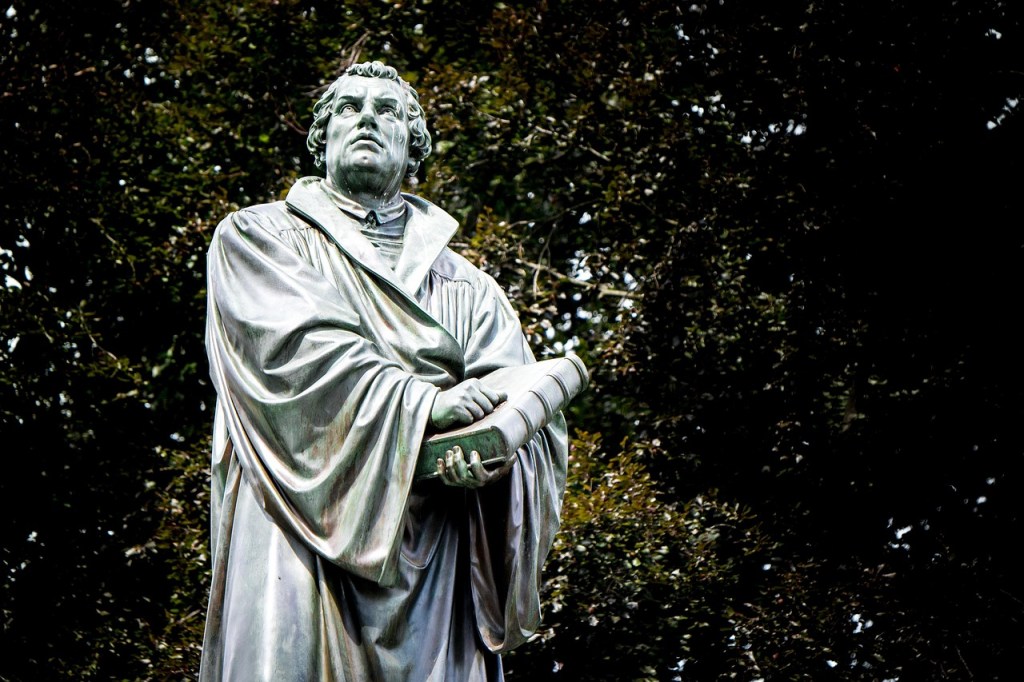
Martin Luther (1483–1546), catalyst of the Protestant Reformation, studied at Mansfeld, Magdeburg, and the University of Erfurt. He abandoned studying law and entered the Augustinian monastery at Erfurt in 1505 after a thunderstorm at Stotternheim left him vowing to become a monk. Tormented by his inability to find peace through works of the law, he turned to Scripture and gradually came to see God’s righteousness as a gift received by faith. On October 31, 1517, he posted his Ninety-Five Theses on the church door at Wittenberg, challenging the abuse of indulgences, particularly the preaching of Johann Tetzel, whose message implied that salvation could be purchased. Luther’s protest exposed how such practices obscured the sufficiency of Christ and the gospel.

 Love Truth Blog