Do not speculate beyond the text. Do not require of it something more than what it simply says. Do not ask, “But precisely how was it that the Spirit accomplished this in a virgin?” For even when nature is at work, it is impossible fully to explain the manner of the formation of the person. How then, when the Spirit is accomplishing miracles, shall we be able to express their precise causes? Lest you should weary the writer or disturb him by continually probing beyond what he says, he has indicated who it was that produced the miracle. He then withdraws from further comment. “I know nothing more,” he in effect says, “but that what was done was the work of the Holy Spirit.”
Shame on those who attempt to pry into the miracle of generation from on high! For this birth can by no means be explained, yet it has witnesses beyond number and has been proclaimed from ancient times as a real birth handled with human hands. What kind of extreme madness afflicts those who busy themselves by curiously prying into the unutterable generation? For neither Gabriel nor Matthew was able to say anything more, but only that the generation was from the Spirit. But how from the Spirit? In what manner? Neither Gabriel nor Matthew has explained, nor is it possible.
Do not imagine that you have untangled the mystery merely by hearing that this is the work of the Spirit. For we remain ignorant of many things, even while learning of them. So how could the infinite One reside in a womb? How could he that contains all be carried as yet unborn by a woman? How could the Virgin bear and continue to be a virgin? Explain to me how the Spirit designed the temple of his body.
— John Chrysostom
Cited from Homily on the Gospel of Matthew 4
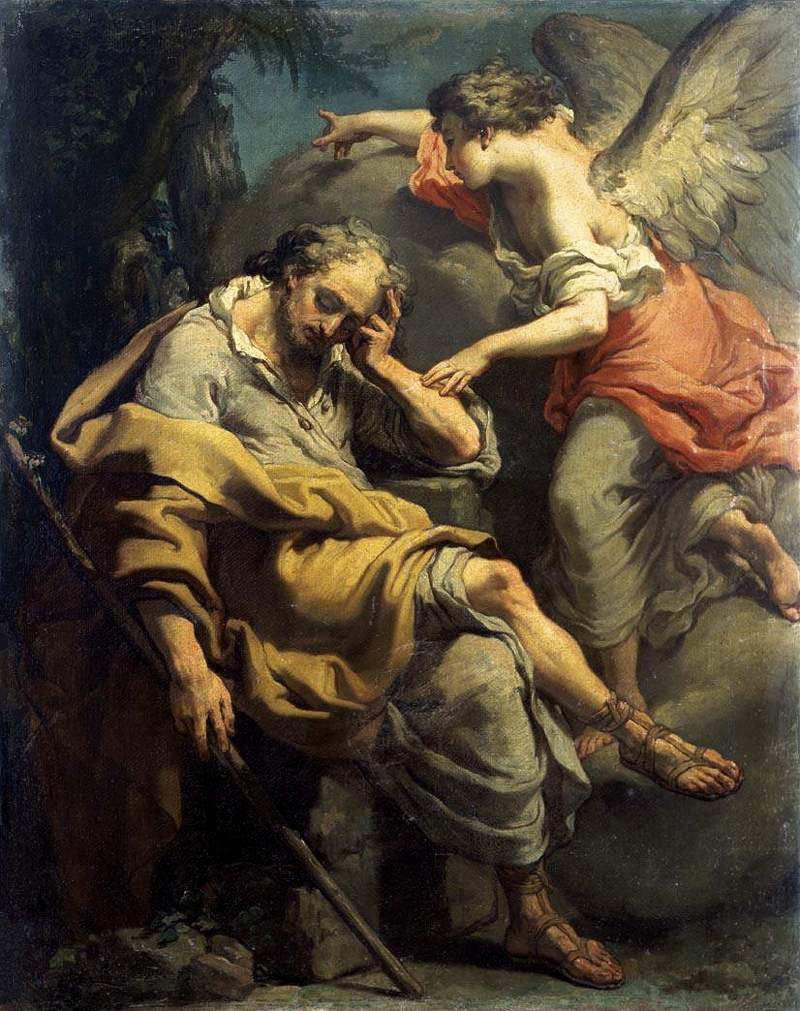
If God exists, then miracles are possible, and the conception of Jesus by the Holy Spirit is precisely such an act of divine intervention. This does not mean that the laws of nature were suspended. Mary’s womb, endometrium, fallopian tubes, and every aspect of her created reproductive physiology operated according to their God-given design or telos. Yet, the virgin birth itself remains an unfathomable mystery. Human wisdom and scientific inquiry cannot penetrate its depths. As John Chrysostom observes, Gabriel proclaimed the good news and Joseph received it, but neither attempted to explain the “how” of the miracle. Scripture offers no further detail, and we ought not force it to speak beyond what it says. Instead, we receive this wonder with reverent awe and rejoice that in the Child born of the Virgin Mary. God has indeed come to visit His people! Heaven and Earth are being reunited.
John Chrysostom (c. 347–407 AD) served as Archbishop of Constantinople and was one of the most prolific of the Eastern Church Fathers. Renowned for his eloquence in preaching, he earned the epithet Chrysostom, meaning “golden-mouthed.” A fearless critic of moral laxity and corruption among both ecclesiastical and political leaders, his boldness often brought him into conflict with Empress Eudoxia and other authorities, leading to multiple exiles. In 403 AD, the Synod of the Oak deposed and banished him for condemning the empress’s extravagance and the clergy’s moral failures. Though later permitted to return, Chrysostom persisted in denouncing imperial excess, defied orders to remain silent, and was again exiled to a remote region, where he died in 407 AD.

 Love Truth Blog