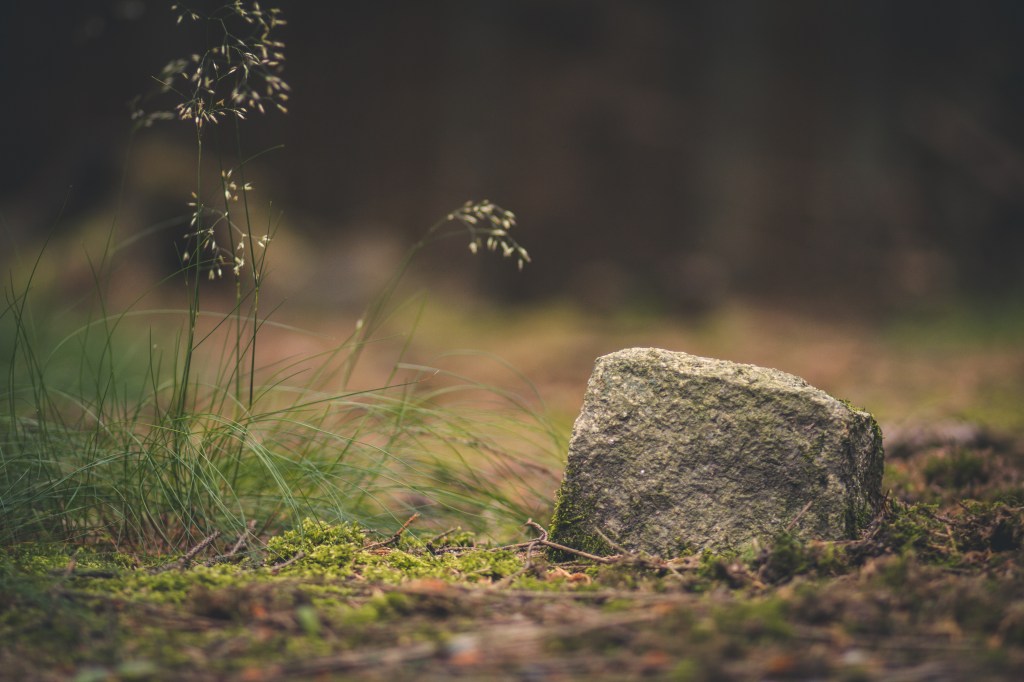
“This Jesus is the stone that was rejected by you, the builders, which has become the cornerstone,” declared Simon Peter before the Sanhedrin (Acts 4:11). [1] Why does Peter identify Jesus Christ as the cornerstone—and what does it mean that the rejected stone now holds the place of highest honor?
Setting: Peter and John were standing trial before the Sanhedrin—the council with the highest religious and political authority in Jerusalem. The two apostles were arrested on the previous day for teaching Jesus of Nazareth resurrected from the dead (Acts 4:1-3).
Peter healed the paralytic who would beg for alms at the temple’s Beautiful Gate. The healed man stood and entered the temple leaping and jumping praising God. Those at the temple took noticed that the man had been healed, and they gathered at Solomon’s Portico to meet with the apostles and inquire about the miracle. Peter attributed the healing to Jesus, whom they crucified but God raised from the dead. The apostle then seized the opportunity to call the audience to repent so that their sins would be blotted out and they could experience the times of refreshing foreseen by Moses and the prophets (Acts 3:1-26).
But the priests, temple captain, and Sadducees became annoyed with the message about Jesus Christ having resurrected from the dead, and they apprehended Peter and John (Acts 4:1-2). Moreover, the Sadducees rejected the doctrine of the future resurrection (Acts 23:8; Lk. 20:27, cf. Marr. 22:23; Mk, 12:18).
Despite the backlash from those who opposed the good news of Christ risen from the dead, the proclamation of this gospel bore fruit and about five thousand came to believe. Estimates place Jerusalem’s population between 25,000 and 85,000, with only about 6,000 Pharisees in all Palestine according to Flavius Josephus, making the figure of 5,000 Jewish male converts to Christianity in Jerusalem—excluding women and children—remarkably substantial.[2] God’s Word never comes back void even when there is fierce opposition against the evangelist.
Peter’s Testimony: “By what power or by what name did you do this?” the Sanhedrin inquired. Peter, filled with the Holy Spirit, responded that the “good deed” of healing the paralytic, the “means” such took place, was on account of “the name of Jesus Christ of Nazareth, whom you crucified, whom God raised from the dead” (Acts 4:8-10). Here we are reminded that it is the resurrected Jesus working through the Christian that good deeds come about.
Peter goes on to explain, “This Jesus is the stone that was rejected by you, the builders, which has become the cornerstone. And there is no other name under heaven given among men by which we must be saved” (Acts 4:11–12). The imagery is clear: the builders—the Sanhedrin—rejected the stone,[3] Jesus Christ, yet He becomes the cornerstone by virtue of God resurrecting Him from the dead and Him becoming humanity’s only Savior. Jesus is the cornerstone. He is our firm foundation. If we want to know our true worth, it is only found in Christ, who has come to save us from our sin. He gives us hope and purpose for living. He conquers death, and thorough Him we receive resurrection life.
The Rejected Stone Becoming the Cornerstone: Peter usage of the imagery of the rejected stone becoming the cornerstone echoes Jesus’ teaching, specifically the parable of the wicked tenants (Luke 20:9–18). In the parable, a vineyard owner sends servants—representing the prophets—only to have them beaten and rejected. Finally, he sends his beloved son, whom the tenants kill to steal the inheritance. But the owner of the vineyard responded with lethal force. The meaning is unmistakable: Israel’s leaders rejected God’s messengers and would ultimately reject His Son. Yet this rejection does not thwart God’s plan—it fulfills it. The vineyard is entrusted to others, and the rejected Son becomes central to God’s redemptive work. The good news about Jesus Christ is proclaimed, many positively respond to the preaching of the evangelist, and they are saved.
Jesus and Peter’s use of the rejected stone becoming the cornerstone imagery is drawn from Psalm 118. This is a psalm of thanksgiving celebrating the Lord’s steadfast love that endures forever (vv. 1–4). The psalmist recalls being surrounded by enemies yet delivered by God’s mighty hand, urging trust in the Lord rather than in human strength (vv. 5–18). He then seeks to enter the gates of righteousness to give thanks, proclaiming that the one once rejected has been exalted—“the stone the builders rejected has become the cornerstone”—and rejoicing in the Lord’s marvelous work in making this day of salvation possible (vv. 19–24).[4] The psalm continues with a plea for salvation and success (v. 25), a blessing upon the one who comes in the name of the Lord, and a call to worship and sacrifice in the light of God’s presence (vv. 26–27), before concluding with renewed thanksgiving for His enduring love (vv. 28–29). One can easily see David as a stone rejected by builder whom Yahweh established as a cornerstone for a magnificent dynasty. But Jesus Christ is the quintessential fulfillment of the rejected stone whom God set as the cornerstone.
The Sanhedrin were astonished that Peter and John were uneducated, ordinary men, yet they clearly recognized them as having been with Jesus (Acts 4:13). The healed lame beggar stood in the courtroom, making the miracle impossible to deny (Acts 4:14). Unable to punish the apostles because the people were praising God for what happened—and that the man who had been crippled from birth was over forty years old—the council simply ordered them not to speak or teach in the name of Jesus. Peter and John replied that they must obey God rather than men and could not stop proclaiming what they had seen and heard (Acts 4:15-22). It is not so much that the first Christians were antiestablishment and opposed to complying to civil authorities; rather, they received a sacred commission and calling from Christ, which had greater incumbency than even the ruling of the Sanhedrin.
After being released Peter and John reported to fellow believers what happened with the chief priest and elders (Acts 4:23), they prayed that God would allow them to continue speaking His word with boldness as He performs signs and wonders through Jesus (Acts 4:24-30), then the gathering place shook, and they were filled with the Holy to speak boldly the word of God (Acts 4:31).
The rejected stone becoming the cornerstone imagery unfolds on multiple levels. Literally, it reflects a stone dismissed as unfit, only to be later recognized as essential. In the psalm’s original context, it symbolizes a king once doubted but vindicated by God’s deliverance. Ultimately, in Christ, it reaches its fullest meaning: the Messiah rejected by human authorities is exalted by God through the resurrection. [5]
Conclusion: Christians are entrusted with the same mission given to Simon Peter, John the son of Zebedee, and the other Apostles—to proclaim the good news of Jesus Christ risen from the dead. While God may work powerfully through us, similarly to Peter’s healing of the paralytic, the message we carry will not always be met with approval; opposition is inevitable. Jesus is the stone rejected by the builders, yet through His resurrection God sets Him as the cornerstone. If Christ is the cornerstone, then our lives must be aligned with Him—not as one option among many, but as the only Savior who heals our brokenness and brings resurrection life. Whether or not this message is received, we are called to proclaim it faithfully, for salvation is found in no one else. Like the apostles, we must obey God rather than men, praying that the Sovereign Lord would grant us boldness through the filling of the Holy Spirit to speak His word with courage.
— WGN
[1] All Scripture cited from the Holy Bible: English Standard Version (Wheaton, IL: Crossway Bibles, 2025), unless noted.
[2] Craig S. Keener, The IVP Bible Background Commentary: New Testament (Downers Grove, IL: InterVarsity Press, 1993), Ac 4:4.
[3] Recall the Jesus also stood before the Sanhedrin and testified under oath to being the Son of God, and the enthroned Son of Man foretold by the prophet Daniel. In response, the council charged Him with blasphemy and condemned Him to die (Lk. 22:66-71; Matt. 26:59-66; Mk. 14:55-64; Dan. 7:13-14).
[4] The New American Standard Bible renders Psalm 118:22 this way: “The stone which the builders rejected has become the chief corner stone.” Here the Hebrew phrase l-ro’sh pin-nah [לְרֹ֣אשׁ פִּנָּֽה] is rendered “the chief corner stone.” The King James Version renders the same phrase “the head stone of the corner.” Both the New King James Version and the New Revised Standard Version use “the chief cornerstone,” the English Standard Version uses “the cornerstone,” and the New International Version reads “the capstone.” There is some debate on what part of the building does l-ro’sh pin-nah refer. Is it at the base below, i.e. cornerstone or the crowning point above, i.e. capstone? The New Bible Dictionary notes, “The phrase ‘head of the corner’ can indicate one of the large stones near the foundations of a building which by their sheer size bind together two or more rows of stones, but it is more likely to refer to the final stone which completes an arch or is laid at the top corner of a building (so Jeremias)” (J. B. Taylor, New Bible Dictionary, ed. D. R. W. Wood et al [Downers Grove, IL: InterVarsity Press, 1996], 228). Whether the psalmist has in mind capstone or cornerstone is far from a settled debate. Does this pose any problem for Bible readers seeking to understand the essential message of Psalm 118:22? No. Craig Keener in the IVP Bible Background Commentary: New Testament indicates “this point is not crucial to the interpretation of the passage” (Craig S. Keener, The IVP Bible Background Commentary: New Testament [Downers Grove, IL: InterVarsity Press, 1993], Mt 21:42).
[5] I. Howard Marshall, “Acts,” in Commentary on the New Testament Use of the Old Testament (Grand Rapids, MI; Nottingham, UK: Baker Academic; Apollos, 2007), 550–551.

 Love Truth Blog