Smartphones are practically ubiquitous. Billions of people all over the world own and use them on a daily basis. Interestingly, these handheld gizmos are prime examples of intelligent design. All the hardware (e.g. touchscreen, microphone, speaker, camera, light, etc.) is integrated into a small device and operated with software (apps) to perform various specified tasks (phone calls, surfing the Internet, ordering take out, sharing photos, making videos, etc.).
No smartphone ever came by unguided purposeless processes; rather, they were designed for a purpose according to a set plan to accomplish specified tasks. Smartphones, thus, bear the marks of intelligent design. The marks of intelligent design infer an intelligent designer. In the case of the smartphone, there were numerous intelligent designers involved. Smartphone makers included: engineers to designed the hardware, fabricators to construct the components, assemblers to put the components together, software programmers to write the apps that run the hardware, and hosts of other contributors. Smartphones came as the result of intelligent causes. If a person who had never seen a smartphone before found one on the ground, that person would doubt it was a strange rock formation. Rather, the person would like realize it was something made by someone with an intelligent mind. In the same way, the signs of intelligent design in the universe infer an intelligent designer. This is typically referred to as the teleological argument for God’s existence. Complex biological life on Earth is a sign of intelligence design inferring an intelligent designer. I offer the following examples for consideration.
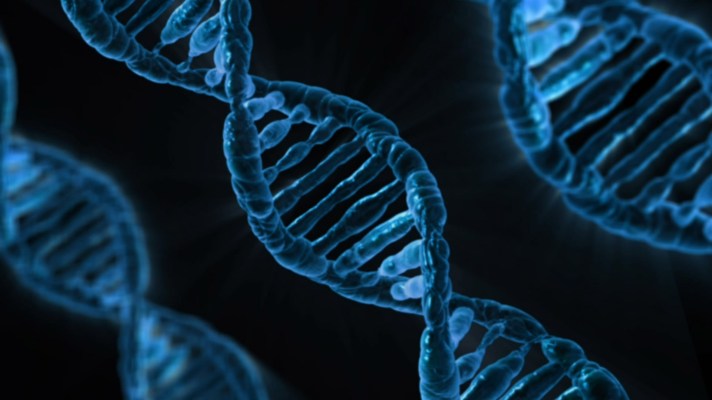
Deoxyribonucleic acid (DNA) is said to be the building block of life. All life forms on this planet, whether single celled or multicellular, have chromosomes, the chromosomes are comprised of genes, and the genes are comprised of DNA. The development of all complex life is based upon instructions encoded within DNA molecules. Dr. Stephen Meyer, Director of the Discovery Institute Center for Science and Culture, explains:
We know from our experience that we can convey information with a twenty-six-letter alphabet, or twenty-two, or thirty — or even just two characters, like the zeros and ones used in binary code in computers. One of the most extraordinary discoveries of the twentieth century was that DNA actually stores information — the detailed instructions for assembling proteins — in the form of a four-character digital code.
The characters happen to be chemicals called adenine, guanine, cytosine, and thymine. Scientists represent them with the letters A, G, C, and T, and that’s appropriate because they function as alphabet characters in the genetic text. Properly arranging those four “basis,” as they’re called, will instruct the cell to build different sequences of amino acids, which are the building blocks of proteins. Different arrangements of characters yields different sequences of amino acids.1
Instructions for the development, function and reproduction of multicellular life are encoded in DNA.
It is unlikely that DNA instructions (i.e. meaningful information) come as the result of random unguided processes; rather, intelligent causes produce meaningful instructions. Device apps are a computer program written by a programmer (or group of programmers); hence, programmers are the intelligent cause of device apps. It is reasonable to infer from the DNA instructions for development, function and reproduction of multicellular life come from an intelligent cause. For further study on intelligent cause of DNA information, see Stephen C. Meyer, Signature in the Cell: DNA and the Evidence for Intelligent Design (New York: HarperOne, 2009).
Multicellular lifeforms bear body parts that resemble machinery. Dr. Michael Behe, Professor of Biochemistry at Leigh University, indicates,
Life is actually based on molecular machines…They haul cargo from one place in the cell to another; they turn cellular switches on and off; they act as pulleys and cables; electrical machines let current flow through nerves; manufacturing machines build other machines; solar-powered machines capture the energy from light and store it in chemicals. Molecular machinery lets cells move, reproduce, and process food. In fact, every part of the cell’s function is controlled by complex, highly calibrated machines.2
Even the body parts of multicellular lifeforms can be described as irreducibly complex. This means they only could have emerged fully functional, as opposed to long unguided processes of chance mutations. An example of an irreducibly complex device is the typical mousetrap. A typical mousetrap has a hammer, spring, catch, holding par, and platform. A loss of a single part renders the mousetrap useless. You could make a simpler mousetrap with paper and glue but that too is irreducibly complex — take away the glue and nothing gets struck on the paper, rendering the trap useless. You can repurpose all the parts of a typical mousetrap for something else, use the spring and platform as a paperclip, but all the parts have to be put together in order for the contraption to be a functioning mousetrap. Even in a smartphone, a breakdown in one of the hardware components or a corruption in a line of code for a software app can cause the unit to malfunction. All the parts work together as an integrated system.
One example of irreducible complexity in biological organisms is the bacterium flagellum. Dr. Behe writes that “some bacterial swim by rotating their flagella. So the bacterial flagellum acts as a rotary propeller,” and “the flagellin filament is the paddle surface that contacts the liquid during swimming.”3 The bacterium flagellum system is comprised of various sorts of proteins. Dr. Behe contends that “because the bacterial flagellum is necessarily composed of at least three parts — a paddle, a rotor, and a motor — it is irreducibly complex.”4 It is unlikely that the bacterial flagellum system can be explained by gradual unguided evolutionary processes; rather, the emergence of this irreducibly complex bodily part suggest the foresight, purpose, and activity of intelligence. For further study on irreducibly complex molecular machines, see Michael J. Behe, Darwin’s Black Box: The Biochemical Challenge to Evolution (New York: Touchstone, 1996).
Multicellular lifeforms even possess integrated systems of organs that function together to accomplish specific tasks. One example of this is the integrated system of organs which give dolphins the ability to use echolocation. In other words, the dolphin is able to send out sound waves, receive the echo from the soundwaves bouncing off of objects, and interpret the audio into meaningful and useful information to act upon. Using echolocation, the dolphin is able to locate things in murky waters or hidden under the sand, and they are considered to have the most efficient sonar system on earth. 6
The integrated system of organs for avian flight is still another sign of intelligent design in nature. What birds need to fly include bodies with the right kind of bone structure, feathers, aerodynamics, and shape. Avian biology even needs to function as an internal gyroscope for stabilizing their head and body in flight. Failure in any of these components for flight would make avian flight impossible.7
Even the integrated system of organs for human vision is a sign of intelligent design in nature. The human eye itself is a very complex organ comprised of numerous functioning parts (e.g. cornea, iris, pupil, lens, retina, etc.). Moreover, the eye works in tandem with the optical nerve (an array of nerve fibers) connected to the brain. The eyes work with the brain to coordinate the movement of other body parts, including the muscle system that allow the eyes to pan up, down, left and right. Functioning eyes help us to get a picture of the external world and play a major role in our daily activities. “Without the coordinated development of the eye and brain in synergistic fashion, the isolated developments of either are not only meaningless but counterproductive. The eye was flawlessly designed by God to work in synergy with the entire body,” says Hank Hanegraaff.8
How the lifeforms came to possess its specific integrated organ systems that function together to accomplish tasks defies any naturalistic explanation. It is really inconceivable that they came as the result of random unguided processes and chance mutations favoring survival over extinction. Mutations, especially genetic mutations, more often turn out to be detrimental to survival of creatures, as opposed to some that would turn out to be beneficial for the survival of a lifeform.
Signs of intelligent design on Earth include: 1) Genetic information stored in DNA, the building blocks of life; 2) Body parts of multicellular lifeforms being irreducibly complex; 3) Bodies with integrated organs systems functioning together to accomplish tasks, as in the cases of echolocation in dolphins, flight in birds, or sight in humans. All these things are unlikely the product of unguided processes and random mutations; rather, they bear the signs of intelligent design. An intelligent cause is the best explanation for things like information, irreducible complexity, and integrated systems operating with purpose. Earth’s diversity of complex biological life points to an intelligent designer. All complex biological life on Earth are ultimately creatures made by a Creator.
There are skeptics that brush off any proposal of intelligent design as something pseudoscientific or unprovable. Nevertheless, advocates for intelligent design have offered well-reasoned and responses to their critics. The Christian Research Journal has even published a number of articles addressing common skeptical criticism against intelligent design. Here are several examples: “Mechanism, Magic and Design” by William A. Dembski, “Objections Overruled: Responding to the Top Ten Objections against Intelligent Design” by William A. Dembski and Sean McDowell, “Are there Non-Religious Skeptics of Darwinian Evolution and Proponents of Intelligent Design?” by Casey Luskin, and “Unlocking the DNA Enigma” by Stephen C. Meyer.
We know that God exists because the signs of intelligent design on Earth infer an Intelligent Designer. This fits well with the biblical teaching on God being the creator of all things. Moses testified: “In the beginning, God created the heavens and the earth” (Gen. 1:1, ESV). The Lord also spoke through Isaiah the prophet saying, “I made the earth | and created man on it” (Isa. 45:12). Paul wrote that “by [Christ] all things were created, in heaven and on earth, visible and invisible, whether thrones or dominions or rulers or authorities—all things were created through him and for him. And he is before all things, and in him all things hold together” (Col. 1:16-17, ESV)
— WGN
Notes:
- Lee Strobel, The Case for a Creator: A Journalist Investigates Scientific Evidence That Points Toward God (Grand Rapids, MI: Zondervan, 2004), 223-224
- Strobel, The Case for a Creator, 198-199.
- Michael J. Behe, Darwin’s Black Box: The Biochemical Challenge to Evolution (New York: NY: Touchstone, 1996), 70
- , 72.
- Living Waters: Intelligent Design in the Oceans of the Earth, directed by Ladd Allen (La Mirada, CA: Illustra Media, 2015).
- Flight: The Genius of Birds directed by Ladd Allen (La Mirada, CA: Illustra Media, 2013).
- Hank Hanegraaff, The Creation Answer Book (Nashville, TN: Thomas Nelson, 2012), 165-166.

 Love Truth Blog
‘It is unlikely that DNA instructions (i.e. meaningful information) come as the result of random unguided processes’ : ah, you’re talking probability. What figures are you using to draw that conclusion and where do you get them from?
LikeLike
This has to do with a “combinatorial problem.” A bike combination lock w/ four dials with ten settings on the dial poses a combinatiorial problem – only 1 numerical combination will work in 10,000 possible combinations. Similar but more complex combinatiorial problems come up with amino acid combinations for proteins and even the sequencing of DNA. A simple cell like Mycoplasma genitalium requires 482 proteins and 562,000 bases of DNA. Just to get 1 protein of 150 amino acids is about 10 to the power of 195. Check out chapters 9-10 in Signature in the Cell: DAN and the Evidence for Intelligent Design (HarperOne) by Stephen C. Meyer.
LikeLike
I don’t have access to that right now. I hope it doesn’t make the unrealistic assumption that the appeared as a one-time spontaneous creation event; Chemical soup to single-cell organism. No biologist has seriously proposed such a scenario. If that were so, then the figures would be impossibly large. Many writers on WP have made such a straw-man claim. I’m not suggesting you have, but many others do on this platform
LikeLike